Sensory Sensitivity as a Unifying Mechanism
We outline connections between the gut microbiome, autoimmune conditions, neuropathic pain, eye pain, chemical intolerance, and a specific set of “overactive” mental illnesses. All seem to be connected to a sensory processing disorder. This is joint work with Luca Estinto.
We propose there is collection of disorders characterized by sensory processing issues. This collection of symptoms affects many and is rarely viewed holistically. We propose to view them holistically and approach their treatment as such – keeping in mind that autoimmune disorders usually are best detected genetically, and medication-wise sensory processing is best treated using tricylic antidepressants, GABA analogues, and glasses prescribed by a behavioral optometrist.
Sensory processing disorders and connectivity
People who react strongly to perfumes and strong smells (chemical intolerance) are such that they perceive a smell at a constant level of intensity, the signal is processed at the same intensity over time. Normal people perceive the signal intensity to decrease over time, they “get used to it”. Signal intensity is monitored via brain blood flow (measured using EEG and fMRI). The same blood flow pattern as those with chemical intolerance is found in those with chronic pain.1,2
Sensory processing disorders and glutamate
If you want to imagine what life is like as a highly sensitive person recall what it is like to have a hangover — when you have a hangover you have an excess of free glutamate which causes overexcitability of sensory processing.
Children with sensory processing disorders have disconnected white matter (measured using DTI)3.
It is worth nothing that Gabapentin (600mg) seems quite effective in cases of patients who tend toward alcohol to calm overexcitability and anxiety. Gabapentin is structurally similar to the neurotransmitter glutamate and competitively inhibits branched-chain amino acid aminotransferase (BCAT), slowing down the synthesis of glutamate.
Excitable Mental Illness and the role of Glutamate
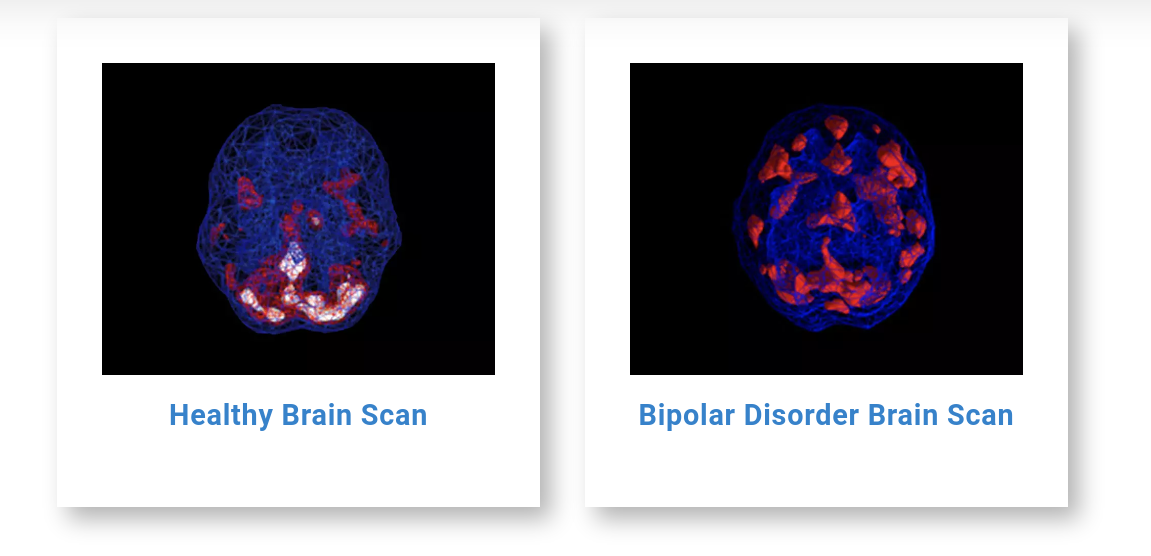
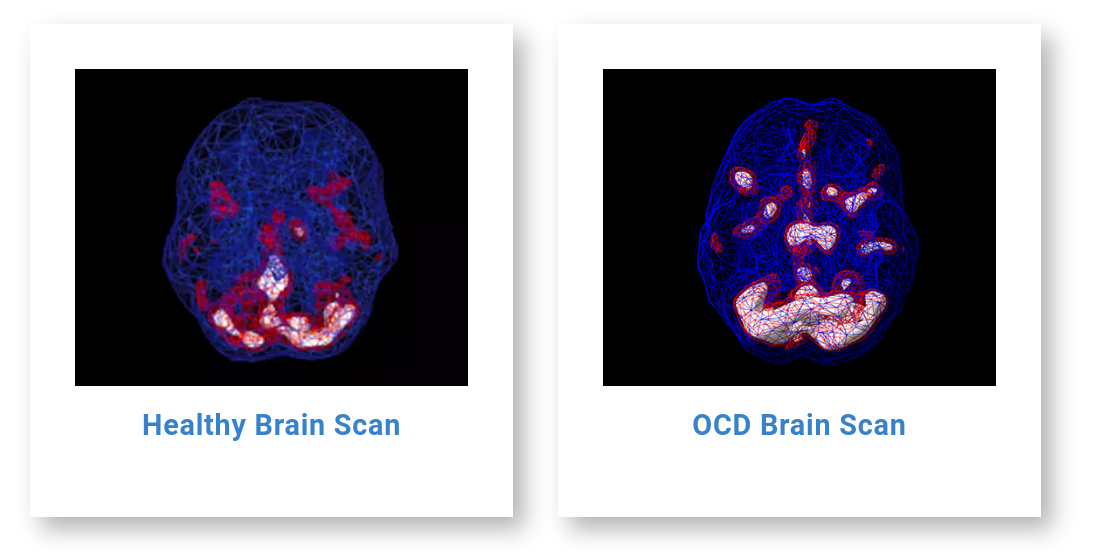
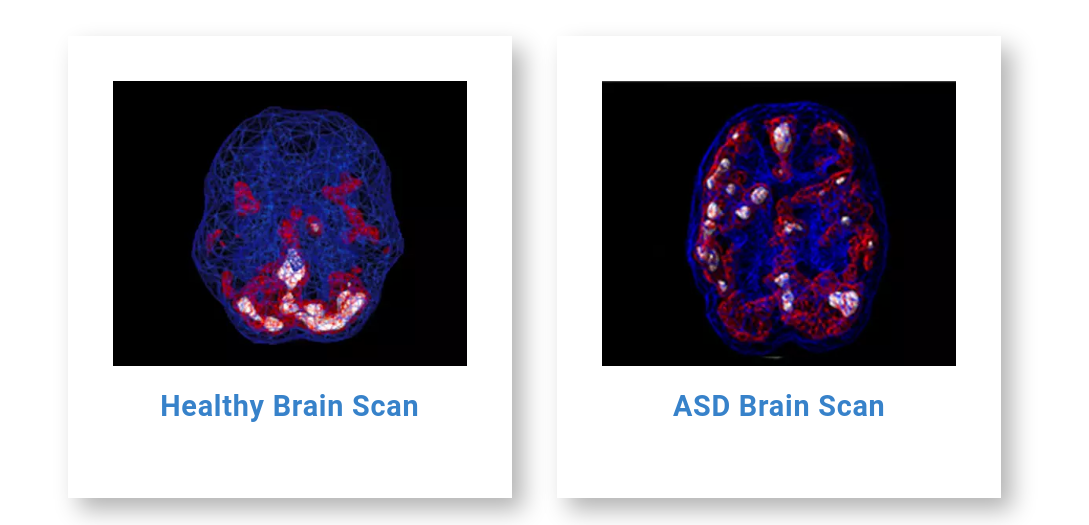
A sensory processing disorder makes excitable mental illnesses more likely. Mental illness wise, adhd, aspergers, bipolar, anxiety and autism have “ring of fire” blood flow patterns in the brain. Too much glutamate causes overexcitability of the brain (measured using SPECT).4 Their clinic uses SPECT imaging as a diagnostic tool for psychiatric treatment5. Some examples (all photos are from the Amen Clinic):
SPD causing Visual Tunneling and Autoimmune conditions affecting Eyesight
Visual tunneling is a particularly pervasive issue that affects all senses, it results from an overload of visual sensation in the brain. Tunneling is a subconscious spatial adaptation to reduce the information the individual handles. The individual is either overwhelmed with informatio or has trouble sorting out the significant area for attention.6
“Cognitively speaking, for these individuals to succeed, they subconsciously fragment space or tunnel, i.e. reduce the amount of information processed in order not to be overwhelmed in dealing with abstract or conceptual activities. In the physiological aspect, the complications of this adaptation for the hyperopic patient include moving the pelvis backward and the forehead forward, and the eyes feel like they are turned out.” This visual tunnelling affects their ability to control their attention, as well as motor and postural changes. For example, one might walk with smaller steps, round their shoulders, lock their knees when standing, and develop upper back, shoulder, or neck tension.
Nutrient deficiences such as low vitamin D as well as being sensorily overwhelmed cause eyesight issues (autoimmune diseases of the eye and visual tunneling respectively). For vitamin D what has been shown is an association: people with low vitamin D were about three times as likely to have noninfectious anterior uveitis.7
Sensory processing disorders and Autoimmune Disease
People who are highly sensitive (a genetic trait) are more likely to have autoimmune diseases such as diabetes, and I would postulate, celiac.8 Celiac and diabetes are often comorbid: about 6% of people with type 1 diabetes have biopsy-proven celiac disease.9
This study does not show causalty, it shows that 50% of children with autism also suffer gastrointestinal symptoms, such as celiac disease or constipation, comorbidly. Children with ASD have altered gut microbial composition, with decreased gut bacterial variety and underestimation of potentially helpful bacteria such as Bifidobacterium, Prevotella, and Desulfovibrio, as well as a decrease in short-chain fatty acids.10
It runs the other way too: in 3.56 million Danes, a prior autoimmune disease raised the risk of a later mood disorder by 45%.11
The Enteric Nervous System is a Sensory System
We tend to talk about the gut as something our senses act on. It is more accurate to say the gut is itself a sense organ, and it is built out of the same parts as touch and taste.
Your gut has its own sensory neurons (intrinsic primary afferent neurons, or IPANs), and they can run a reflex from start to finish without asking the brain. This was only firmly shown in the mid-1990s. Something chemical or mechanical sets them off, they tell the interneurons, the interneurons tell the motor neurons.12 There is also work suggesting these neurons are not specialists, each one does several jobs and they act together as a sensory network, and this holds across different parts of the gut and across species.13
Now look at the lining of the gut. Enterochromaffin cells carry chemosensory receptors, are electrically excitable, and talk through synaptic contacts to serotonin-sensitive nerve fibres14. They are also literally touch sensors: press on them and they release serotonin, and they express Piezo2, which is the same channel you use for light touch and for knowing where your limbs are15. Beyder’s group compares them to the Merkel cells in your skin15.
Then there are neuropod cells, which synapse directly onto the vagus nerve and pass along what is inside the gut within milliseconds, using glutamate16. So the inside of your gut is one synapse away from your brainstem.
The same genes show up in both places. Over 90% of the 62 top-ranked autism risk genes (in SFARI) are expressed in the gut as well as in the brain17. Cntnap2, a synaptic adhesion molecule which matters for sensory processing, is expressed mainly in enteric sensory neurons18. SHANK3 is present in the myenteric plexus, and mice missing it have guts that are built differently and work differently19.
Lauren Orefice’s lab reports that in mouse models of autism, the nerves which run from the gut to the spinal cord (dorsal root ganglion neurons) send heightened signals20. The same lab found that mutations in the peripheral neurons alone were enough to make a mouse over-react to touch.21
What about in humans? In 2,973 autistic children, every type of chronic GI problem came with higher rates of sensory over-responsivity and of anxiety, and each of those independently predicted GI problems22. A smaller study found the same combined sensory and GI profile in ADHD as well as in autism23. These studies do not show causality, they are correlations from parent reports.
The microbiome sets how excitable these neurons are. Mice raised germ-free have less excitable enteric sensory neurons, and they need a microbiome for their nerves to work normally at all24,25. It goes the other way too, serine proteases made by commensal bacteria calm down dorsal root ganglion neurons26.
And the gut can get stuck. If enterochromaffin cells are kept activated for long enough you get lasting visceral hypersensitivity, even with no inflammation to start it27. I would postulate that this is the gut’s version of never getting used to the perfume.
Remark: Whether glutamate does anything inside the enteric nervous system itself is contested. One review says all of the glutamatergic machinery is there28, but Wood’s lab found that neither glutamate nor its receptor agonists excited enteric neurons29. The result we trust is the synapse from the neuropod cells to the vagus.
Remark: Nearly all of the mechanism above is from mice. We have not found a study which tests sensory processing disorder on its own against the enteric nervous system.
Enteric Nervous System and Excitable Mental Illness
Our guts produce 90% of serotonin, if you are low on folic acid or any other basic vitamins/nutrients you literally cannot create serotonin, dopamine, and other neurotransmitters30. Would a severe serotonin deficiency show up in a SPECT scan? SPECT cannot see serotonin itself, but it can see the serotonin transporter, and in a small study people with major depression had less transporter binding in the midbrain, the more depressed the less31.
It is the bacteria that set the level: spore-forming gut bacteria push the enterochromaffin cells to make serotonin (measured in mice, and with human microbiota).32
There is ongoing work to directly detect and monitor this for diagnostic and treatment purposes.33
The overall changing of gut bacterial community in terms of β-diversity was consistently observed in ASD patients compared with HCs. Furthermore, Bifidobacterium, Blautia, Dialister, Prevotella, Veillonella, and Turicibacter were consistently decreased, while Lactobacillus, Bacteroides, Desulfovibrio, and Clostridium were increased in patients with ASD relative to HCs in certain studies.34,35
Stress changes who lives in your gut. A single two-hour social stressor is enough to shift the bacterial community in mice, and Lactobacillus drops under stress in rodents, primates and humans.36
There has been some recent research on fecal transplants curing some forms of mental illness. The inverse is also true “with the transmission of depressive and anxiety-like symptoms and behaviors resulting from the transplantation of microbiota from psychiatrically ill donors to healthy recipients”. We collect some examples here:37,38,39,40,41
Enteric Nervous system/SPD causing Lowered Immune System causing Autoimmune Disease
If you have a lower immune system (low igA or igG or igM) you are more likely to have an autoimmune disease.
Remark: As a note, you are also more likely than average to have an autoimmune disease with an abnormally strong immune system. This is not the case we are discussing here.
The enteric nervous system generates igA and igG in our body. There is a link between igA and levels with a person’s perception of stress, implying the nervous system has the ability to control igA levels.42
People with IgA deficiency have a different gut microbiota from everyone else, even though their bodies secrete IgM to compensate.43
People with IgA deficiency should be tested for celiac disease because they are 10 to 20 times likely to develop an autoimmune response to gluten than the general population.44
Using tests of raised igA and igG to detect for celiac disease is harmful and ineffective, as having naturally lowered igA and igG is usually comorbid with celiac disease. Thus, the rasied igA and igG register as normal levels on tests, giving many patients false negatives. The most effective test is a DNA test for the celiac markers.45
Immunosenescence or the aging of the immune system is linked to the increase of autoantibody frequency while the antibodies decline46. One way to frame the connection between SPD and being immunocompromised is that higher sensitivity leads to greater stress / perceived stress, which leads to a decrease in immunity which then naturally causes an increase in autoantibodies that would otherwise have occured during someones natural immunosenescence.47
In 106,464 Swedes with a stress-related disorder, the risk of a later autoimmune disease was 36% higher, and 46% higher with PTSD.48
Mechanisms of Functional Dyspepsia and Treatment with Tricyclic Antidepressent
A proposed mechanism is that there is original inflammation, and then continued faulty pain signaling when input is gone. That is, a central sensitization model.49,50,51,52
Autoimmune Disease is Under Direct Enteric Neural Control
The following are quotes from this paper:53
“As in the salivary gland, sIgA is rapidly secreted in mucosal explants from porcine distal colon in response to both cholinergic and adrenergic receptor agonists, but remains unaltered by acute exposure to an enteroadherent microbial pathogen. The enteric neurotransmitters acetylcholine and NE appear to act on muscarinic cholinergic and alpha-adrenergic receptors expressed by crypt epithelial cells to promote transcytosis of the polymeric Ig receptor and enhance vectorial secretion of both sIgA and free SC toward the mucosal surface. In its early stages, this action appears to be temporally coincident with, but mechanistically independent of active ion transport. The precise receptor types and associated signal transduction mechanisms mediating sIgA secretion by these and possibly other enteric neurotransmitters at this mucosal immune effector site remain to be characterized.”
“In a more complex, vascularly-perfused porcine ileum preparation however, electrical stimulation of extrinsic nerves innervating the intestine increases sIgA secretion only after atropine and phentolamine pretreatment; this effect is inhibited by hexamethonium, a blocker of ganglionic neurotransmission. This result suggests that there may exist important inhibitory reflex circuits containing muscarinic cholinergic and alpha-adrenergic receptors which modulate the enteric neural control of sIgA output. Additional investigations will be necessary to establish how basal sIgA secretion onto the mucosal surface in vivo is modulated by the release of acetylcholine from enteric nerves.”
Virome Mediates Stress and Memory Responses
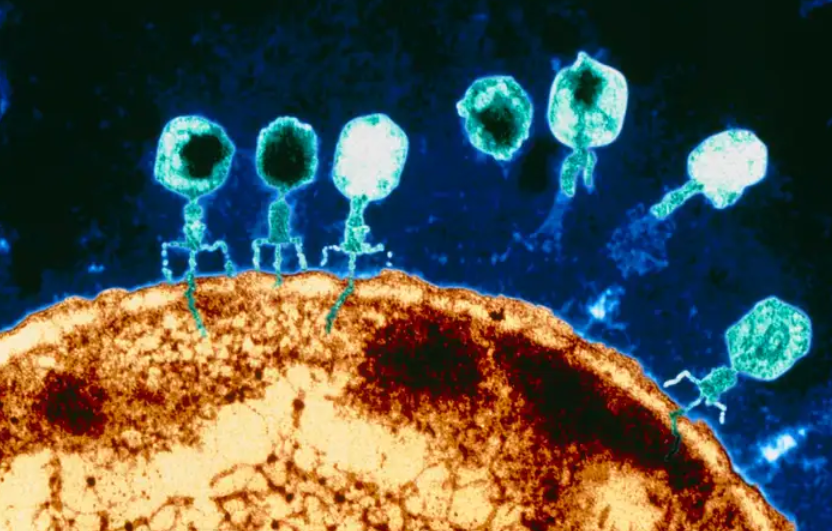
This will be a topic of a future post, it is critical to note that in fact the virome controls the gut biome entirely. Bacteriophages maintain biodiversity of a healthy gut.54
Chronic stress changes the phages in a mouse’s gut, and giving a stressed mouse the virome it had before the stress protects it from the behavioural and immune effects.55
In children at genetic risk of type 1 diabetes, the gut virome became less diverse before the autoantibodies appeared.56
Keyword summary:
- visual tunneling
- chemical intolerance
- chronic pain
- excess free glutamate
- high sensitivity
- autism/ocd/add/ptsd/bipolar
- functional dyspepsia
- sensory processing disorder.
- low autoimmune system
- likelihood to have autoimmune disease
- enteric nervous system
- lowered ability to create serotonin
- joint hyperflexibility